A Regional Development Platform for the Implementation of Uzbekistan’s New Urbanization Model
Introduction
The Republic of Uzbekistan has entered a new stage of economic transformation focused on modernization, sustainable development, accelerated urbanization, industrial growth, and attracting international investment.
Within this strategic framework, Presidential Resolution PQ–298 represents an important milestone in Uzbekistan’s regional development policy. The resolution aims to transform districts, cities, and mahallas (local communities) into modern, comfortable, economically active, and investment-attractive areas.
The objective of PQ–298 goes beyond infrastructure improvement. It introduces a comprehensive approach based on:
- improving quality of life;
- developing modern urban infrastructure;
- supporting entrepreneurship;
- creating new employment opportunities;
- increasing regional competitiveness;
- attracting domestic and foreign investment.
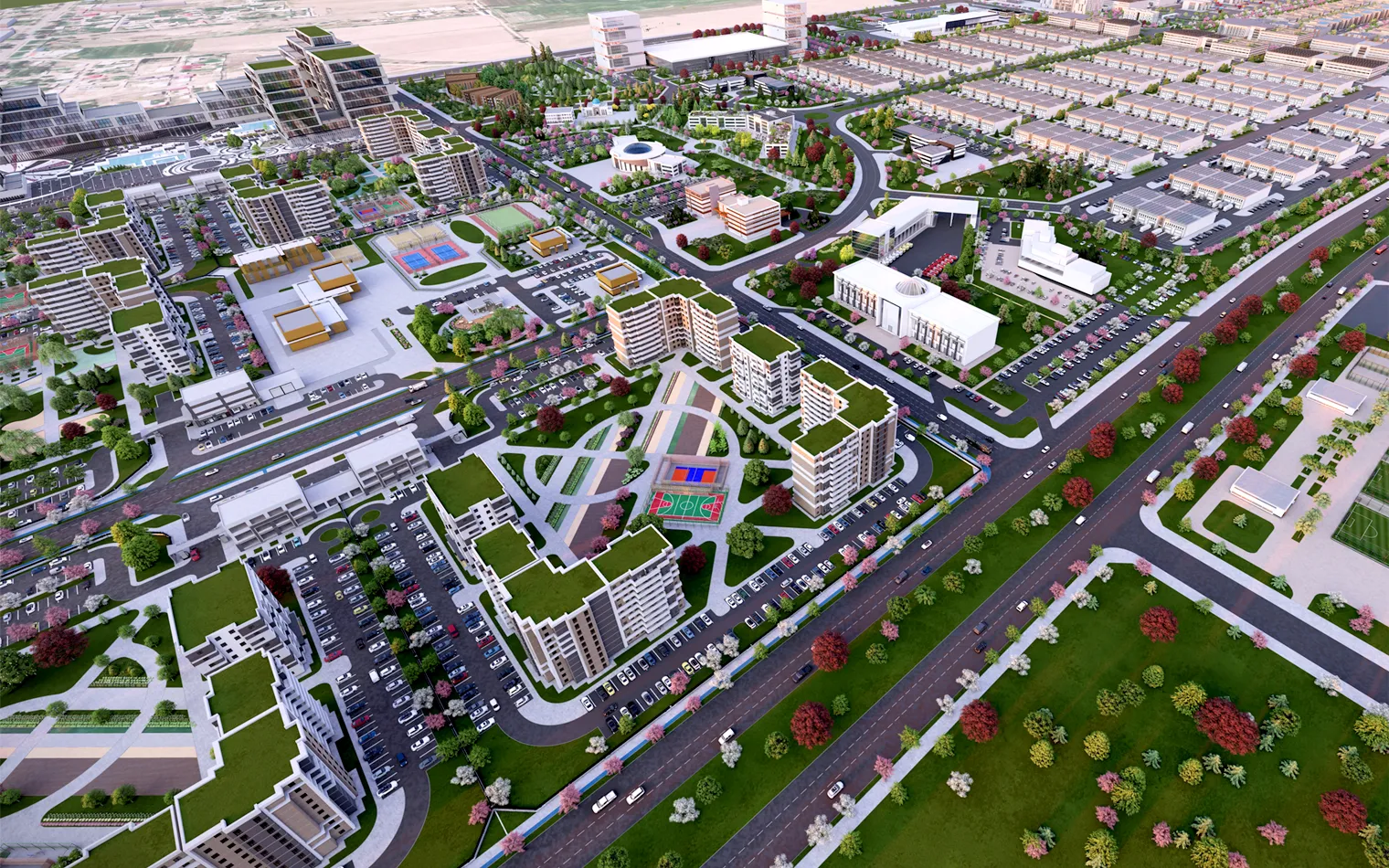
In this context, Central Asia Smart City can be considered as a large-scale strategic project highly aligned with the objectives of PQ–298, providing a practical implementation platform for these principles at a regional and international scale.
1. Strategic Alignment Between PQ–298 and Central Asia Smart City
Presidential Resolution PQ–298 focuses on creating a new generation of urban environments where residential areas, economic activities, social infrastructure, and business opportunities are integrated into a unified development model.
Central Asia Smart City expands this concept into a comprehensive regional ecosystem by combining:
- Smart City infrastructure;
- Green City principles;
- Industrial development zones;
- International logistics facilities;
- Financial services infrastructure;
- Innovation and technology centers;
- Education and research facilities;
- Modern residential communities.
Therefore, the relationship between PQ–298 and Central Asia Smart City can be described as:
PQ–298 — the national policy framework for modern territorial development
Central Asia Smart City — a large-scale investment and urban development model capable of implementing these principles in practice
2. Contribution to the “New Uzbekistan” Urbanization Strategy
Modern global economic development demonstrates that successful countries increasingly depend on the quality of their cities and urban ecosystems.
International examples include:
- Shenzhen in China as a technology and industrial innovation hub;
- Dubai as a global business and logistics center;
- NEOM in Saudi Arabia as a next-generation smart city initiative;
- Singapore as a model of efficient urban management.
These examples demonstrate that modern cities are not only residential areas but also:
- investment platforms;
- innovation centers;
- industrial ecosystems;
- international business hubs.
Central Asia Smart City follows this global trend by integrating:
- advanced urban planning;
- digital technologies;
- sustainable infrastructure;
- industrial production;
- international trade;
- knowledge-based economy.
The project therefore has the potential to become one of the practical models supporting the “New Uzbekistan” urban transformation agenda.
3. A New Investment Ecosystem for International Investors
Today, global investors increasingly prefer integrated economic ecosystems rather than isolated projects.
Central Asia Smart City creates opportunities across multiple sectors:
Real Estate and Urban Development
Investment opportunities include:
- smart residential complexes;
- mixed-use developments;
- business centers;
- hotels;
- commercial facilities.
Industrial Development
Potential areas include:
- high-tech manufacturing;
- export-oriented production;
- industrial clusters;
- research and development centers.
Logistics and Trade
The project can support:
- regional logistics hubs;
- distribution centers;
- international trade platforms;
- supply chain networks.
Green Economy and Smart Infrastructure
Key investment areas:
- renewable energy;
- energy-efficient buildings;
- smart utilities;
- water management systems;
- sustainable transport solutions.
Healthcare and Education
Potential developments:
- international medical facilities;
- research institutions;
- universities;
- innovation campuses.
4. Central Asia Smart City as a Regional Economic Hub
The strategic location of the project in the Tashkent region provides significant advantages.
The area benefits from:
- proximity to the capital city;
- access to international transportation networks;
- connection to regional markets;
- proximity to major trade corridors.
Uzbekistan’s geographical position creates opportunities to become a bridge connecting:
- China;
- Central Asia;
- South Asia;
- the Middle East;
- Europe.
Central Asia Smart City can therefore serve as a new regional platform for:
- manufacturing;
- logistics;
- trade;
- investment;
- innovation.
5. Economic Impact and Investment Multiplier Effect
International experience shows that large-scale urban development projects create strong multiplier effects throughout the economy.
Such projects stimulate:
- construction industries;
- building materials production;
- transportation;
- logistics;
- services;
- technology sectors;
- financial markets.
The implementation of Central Asia Smart City could contribute to:
- thousands of new businesses;
- tens of thousands of direct jobs;
- hundreds of thousands of indirect employment opportunities;
- increased regional economic activity.
Furthermore, the project can attract long-term institutional investors, development funds, and strategic international partners.
6. Strategic Importance for Uzbekistan’s Future Development
PQ–298 establishes the foundation for a new approach to territorial development in Uzbekistan.
Central Asia Smart City complements this strategy by combining:
- urban development;
- industrial growth;
- logistics;
- finance;
- technology;
- sustainable development.
The project represents a transition from traditional urban expansion toward a modern integrated economic ecosystem.
Its strategic value lies in creating a platform where:
People + Business + Technology + Investment + Sustainability
can develop together.
Conclusion
Presidential Resolution PQ–298 represents an important step in Uzbekistan’s transition toward a modern urban development model.
Central Asia Smart City, with its integrated approach combining smart technologies, green infrastructure, industrial zones, logistics networks, financial services, and innovation ecosystems, has the potential to become one of the most comprehensive examples of the “New Uzbekistan” development vision.
With effective implementation, strong public-private cooperation, and international partnerships, the project could become not only a major investment destination for Uzbekistan but also a strategic economic center for the entire Central Asian region.
Central Asia Smart City is not simply a city development project — it is a vision for a new generation economic ecosystem that connects urbanization, investment, technology, and sustainable growth.